Securing a commercial kitchen at Blackfriars Settlement has enabled Plateful Café to relaunch its hospitality training programme and continue supporting refugees and people seeking asylum on their journey towards employment, enterprise and social inclusion.
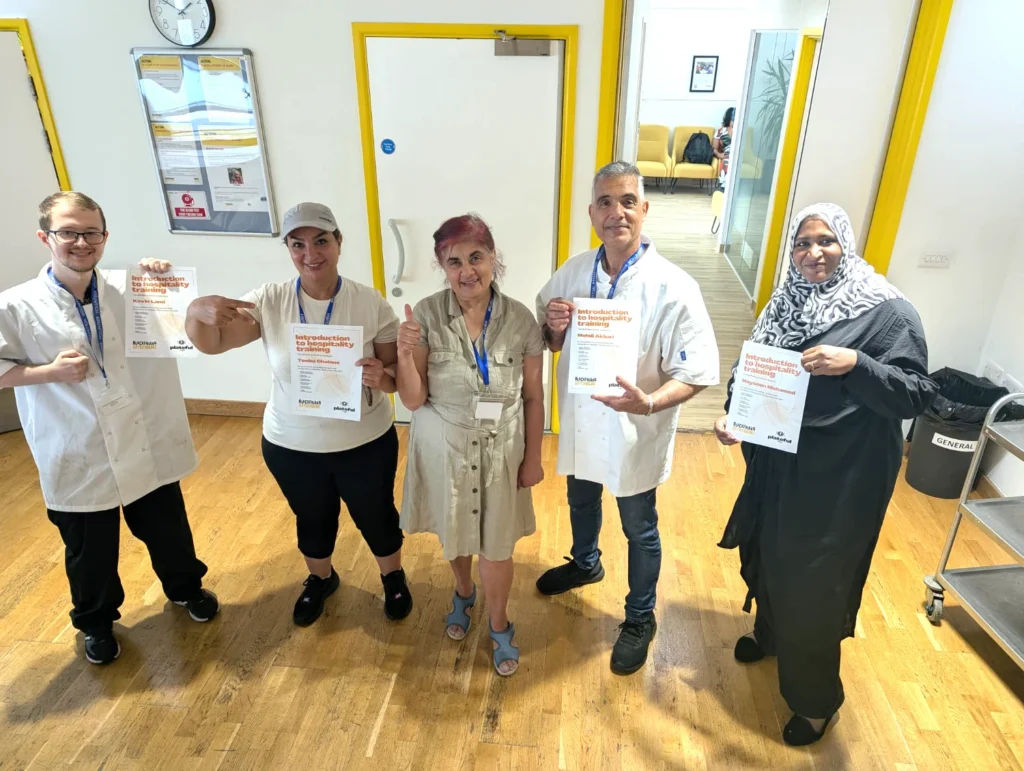
Our Introduction to Working in Hospitality programme ran from 13 April to 30 June 2026, with five participants from Sudan, Albania and Iran successfully completing the course.
Delivered over eight weeks, the programme combined practical kitchen training with English conversation sessions, providing participants with both vocational skills and opportunities to improve their confidence in spoken English.
Training sessions took place every Monday and Tuesday from 10:30am to 1:30pm, followed by a dedicated one-hour English conversation class led by volunteer tutors.
Participants developed a broad range of hospitality skills, including:
The programme was designed not only to teach technical skills but also to prepare participants for the realities of working in a professional kitchen environment.
Participant Mojdeh Gholami reflected on the importance of learning industry standards:
“If we want to work in a kitchen or a hotel, we need this kind of training to learn how to follow hygiene standards and kitchen procedures.”
Mojdeh highlighted learning about food safety, allergen awareness, portion control and food preparation techniques, describing the course as providing
“everything that is essential to know about working in a professional kitchen.”
Kevin Lami spoke enthusiastically about the breadth of knowledge he gained throughout the course, including:
Kevin described the programme as an “unforgettable experience” and expressed gratitude for the opportunity to learn in a supportive environment.
For participant Maysoon Mohammed, the programme provided much more than practical skills.
As the founder of Nubian Delights, Maysoon already had significant baking experience but lacked opportunities to develop and promote her business in the UK.
Through Plateful Café she accessed:
Maysoon shared:
“They don’t focus on the barriers people face – they recognise the skills and experiences we already have.”
She credits the support received through Plateful Café with helping her grow her business, expand her product range and gain confidence as an entrepreneur while sharing Sudanese culture through food.
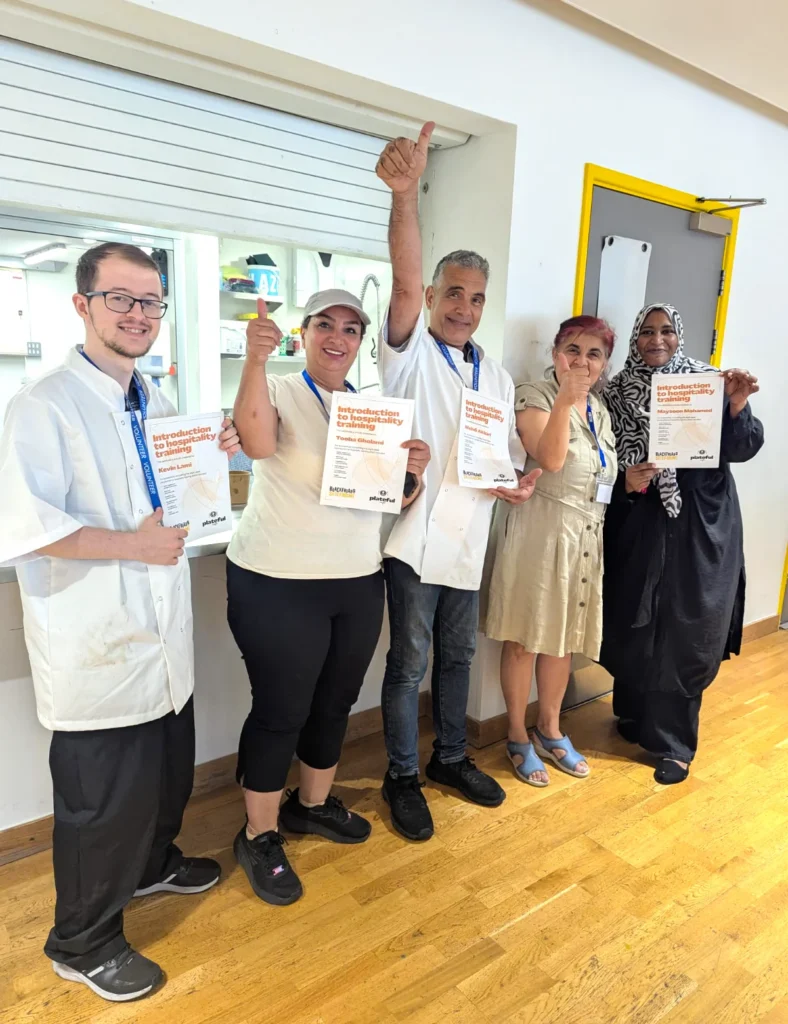
Participant Jafar Mohammed highlighted the wider benefits of the programme:
“I learned how to take care of food and avoid wasting it. I also learned how to bake cakes and bread and many other tasty dishes.”
Importantly, Jafar reported improvements in teamwork, workplace behaviour and spoken English through regular practice with staff, volunteers and fellow participants.
He described the programme as giving him “a new chance in life.”
Alongside practical training, participants attended weekly English conversation sessions delivered by volunteer tutor Dorota.
These sessions focused on hospitality vocabulary, kitchen procedures and workplace communication, helping participants build confidence using English in a professional environment.
The discussions also became an opportunity for cultural exchange, with participants sharing traditional dishes, cooking techniques and food traditions from Iran, Sudan and Albania.
Dorota reflected:
“We talked about kitchen protocol, hygiene, equipment and professional kitchen practices, but best of all we talked about food.”
The sessions created opportunities for participants to practise conversational English while celebrating their cultural heritage and learning from one another.
Topics included:
These conversations helped strengthen relationships, build confidence and create a welcoming learning environment where participants felt valued for the knowledge and experiences they brought with them.
The programme has demonstrated how practical hospitality training can support refugees and people seeking asylum to rebuild confidence, develop employability skills and strengthen social connections.
Key outcomes included:
The successful completion of this first training programme marks an important milestone in the development of Plateful Café’s new training provision at Blackfriars Settlement.
By combining practical hospitality training, English language support and community-building activities, the programme demonstrates how food can be a powerful tool for empowerment, integration and opportunity.
We look forward to welcoming future cohorts and continuing to support refugees and people seeking asylum to build skills, confidence and brighter futures through hospitality.