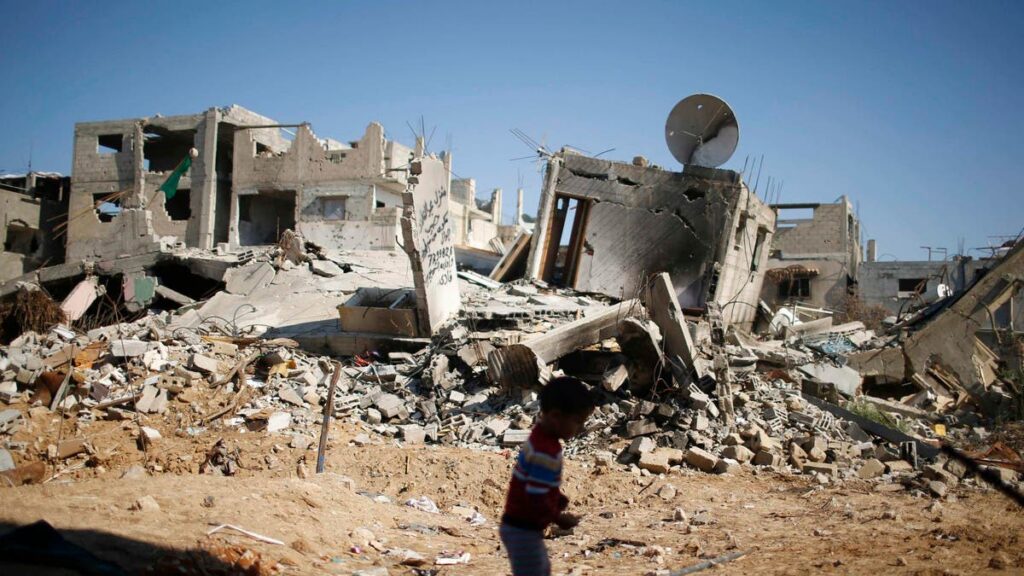
There is a question that many Syrians living abroad have become tired of hearing: “Why haven’t you gone back to Syria? The dictator is gone. The country is liberated. What are you waiting for?” The fall of Bashar al-Assad’s government in December 2024 was a historic moment. But ending a government does not erase 14 years of war, destruction, displacement and economic hardship. Political change can happen in a day; rebuilding homes, schools, infrastructure, the economy and security takes years. When Home No Longer Exists UNHCR estimates that around 328,000 homes were destroyed or severely damaged, with another 600,000 moderately or lightly damaged. The World Bank estimates about $33 billion in direct damage to residential buildings, within roughly $108 billion in total physical damage to buildings and infrastructure. Behind every number is a family. If your home has been destroyed, “going back” may mean returning to rubble and starting your life again from zero. Basic Services Are Still a Challenge Electricity and water supplies remain unreliable in many areas, while damaged infrastructure and fuel shortages continue to affect daily life. These are not luxuries. People need somewhere to live, work, access water and electricity, buy food and stay warm. Safety Has Not Returned Everywhere More than 1.6 million people have returned to Syria since December 2024, according to UNHCR. But serious security challenges remain, including armed groups, unexploded ordnance, local conflicts and regional tensions. There has also been continuing Israeli military activity in southern Syria, including incursions and occasional strikes. UNICEF estimates that around 324,000 unexploded devices remain across Syria. Weapons also remain widely present among parts of the civilian population, making full state control and long-term stability more difficult. Returning home should mean returning to genuine safety—not simply returning to a different kind of uncertainty. Poverty, Child Labour and Education UNICEF estimates that around 2.45 million Syrian children are out of school, with more than one million more at risk of dropping out. Thousands of schools have been damaged or are not functioning properly. Poverty also pushes some children into work. Children can be seen working in restaurants, shops, workshops and markets. Parents naturally want their children to have a safe childhood, a proper education and a realistic future. Fourteen Years Changes People People who left Syria 14 years ago may now have careers, homes, spouses and children. Some children were born or educated in Britain, speak English more comfortably, have British friends and qualifications, and see their future here. For many, Britain has become home. Many Syrians have also obtained British citizenship. That does not erase their connection to Syria. It simply means that belonging can exist in more than one place. Some Syrians who visit after many years even describe feeling like strangers in the country they once knew, because the people, neighbourhoods and circumstances have changed so much. Parents Will Choose What They Believe Is Best Every parent wants what they believe is best for their children. If a family feels safer, more stable and better able to educate their children where they currently live, it is understandable that they may hesitate to return. This is also a basic human instinct. War can happen to any country, and none of us can know with certainty how we would respond if our own home became unsafe. Perhaps We Should Ask a Different Question Instead of asking, “Why are you still here?”, perhaps we should ask: “What would you need in order to feel safe enough to return?” Some Syrians are returning. Others are waiting. Some may never return. These are deeply personal decisions shaped by safety, stability, family needs and the lives people have built over 14 years. Syria has a future, and Syrians can rebuild it. But rebuilding will take time. Homes, schools, water systems, electricity, jobs, security and public institutions all need to be restored. For those of us who have rebuilt our lives in Britain, the question is not whether we love Syria. The question is: “Where can my family have a safe, stable and sustainable future?” Britain has become home for many of us. We have built our lives here, educated our children, learned the language, made friends, worked, contributed to society and, for many, become British citizens. That does not mean we have stopped loving Syria. A refugee is not someone who stopped loving their country. A refugee is someone whose circumstances forced them to build a life somewhere else. Perhaps it is time to stop asking, “Why haven’t you gone back?” and instead remember that, under different circumstances, any one of us could find ourselves making the same decision to protect our family. By Waeed.
When I became Training Manager at Plateful Café, I brought almost twenty years of hospitality experience with me. I understood kitchens, service and the pressures of the industry, but this role taught me to look at hospitality in a completely different way. It showed me that a kitchen can be more than a workplace: it can be a place where people rebuild confidence, discover their abilities and begin to see new possibilities for themselves. My main responsibility was to design and deliver an eight-week training programme for six learners from refugee and asylum-seeking backgrounds. The programme covered the practical foundations of working in a commercial kitchen, including food safety, knife skills, vegetable preparation, cooking techniques, mise en place, teamwork and kitchen communication. As the course progressed, learners also took part in mock services, independent practical tasks and employability sessions designed to prepare them for the realities of applying for and starting work. However, the most meaningful changes were not always the ones that could be measured through a practical assessment. The group began the programme with different levels of English, previous experience and confidence. Some learners were comfortable speaking up, while others needed more time and encouragement before they felt able to ask questions or work independently. This meant adapting how I trained: using demonstrations, visual resources, repetition and clear language rather than relying solely on written instructions. Watching participants become more comfortable in the kitchen was incredibly rewarding. Over time, people who had initially waited for reassurance began organising their own workstations, communicating with teammates and completing tasks with greater independence. Skills that appeared small on paper, calling out clearly, checking a temperature, preparing ingredients consistently or asking for help, represented important steps towards feeling capable and work-ready. The experience also had a significant impact on me. I have always enjoyed training people, but Plateful helped me understand the difference between simply showing someone how to complete a task and creating an environment in which they feel safe enough to learn. It strengthened my patience, adaptability and ability to recognise progress that might otherwise be overlooked. It also reminded me that good training begins with understanding the person in front of you. There were challenges. Delivering meaningful training with limited kitchen access and learners starting from different points required flexibility and creativity. Yet those challenges reinforced the importance of programmes like this. Refugees and asylum seekers often bring determination, knowledge and valuable life experience, but may face barriers that have little to do with their potential. Plateful Café helps bridge that gap. It combines practical hospitality training with encouragement, structure and a genuine sense of belonging. For participants, it can be a step towards employment, independence and renewed confidence. For me, it has been an opportunity to grow as a trainer and to contribute to work with a clear social purpose. I leave the Training Manager role proud of what we created and even more convinced that, when people are given the right environment and support, their potential can flourish. – Sam Carter
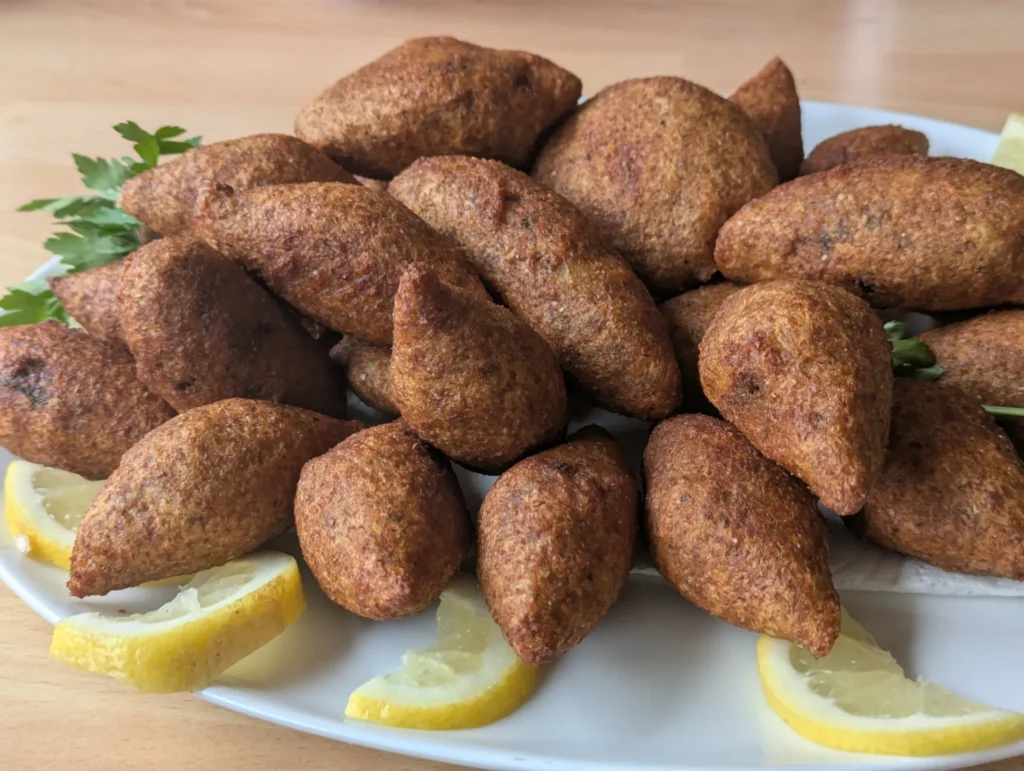
Plateful Cafe was recently featured in UnFeatured Anthony Bourdain once declared the dinner table The Great Equalizer: a space where division melts into unity over aromas and flavours that speak to us in a tongue that the mind doesn’t need to understand. Iolanda echoed him. “When you sit down and eat together, you forget where you’re coming from and just concentrate on the food you’re eating,” she said over a crackly phone call. “It breaks down so many barriers.” With inequality, xenophobia and ethno-nationalism surging across Europe, are dinner tables not more important than ever? To find out, I got in touch with two social enterprises in London and Rotterdam serving up much more than food. One Tbsp. Community Iolanda Chirico is the founder of Plateful Café, a London-based social enterprise that connects refugees with local communities through food. The initiative centres around a team of refugee chefs preparing dishes from their country of origin for pop-up events or catering services. “Every event we do, people forget that the food has been cooked and served by refugees,” Iolanda said. “They just see them like a chef coming from anywhere… the barriers are down.” Read the full article in UnFeatured
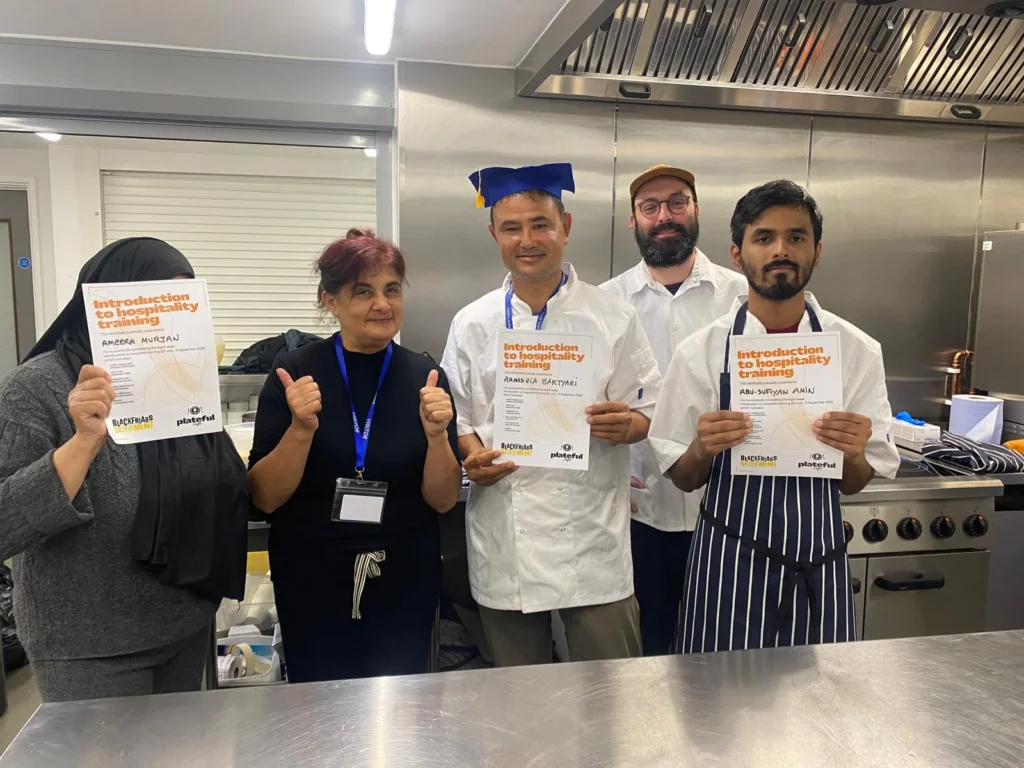
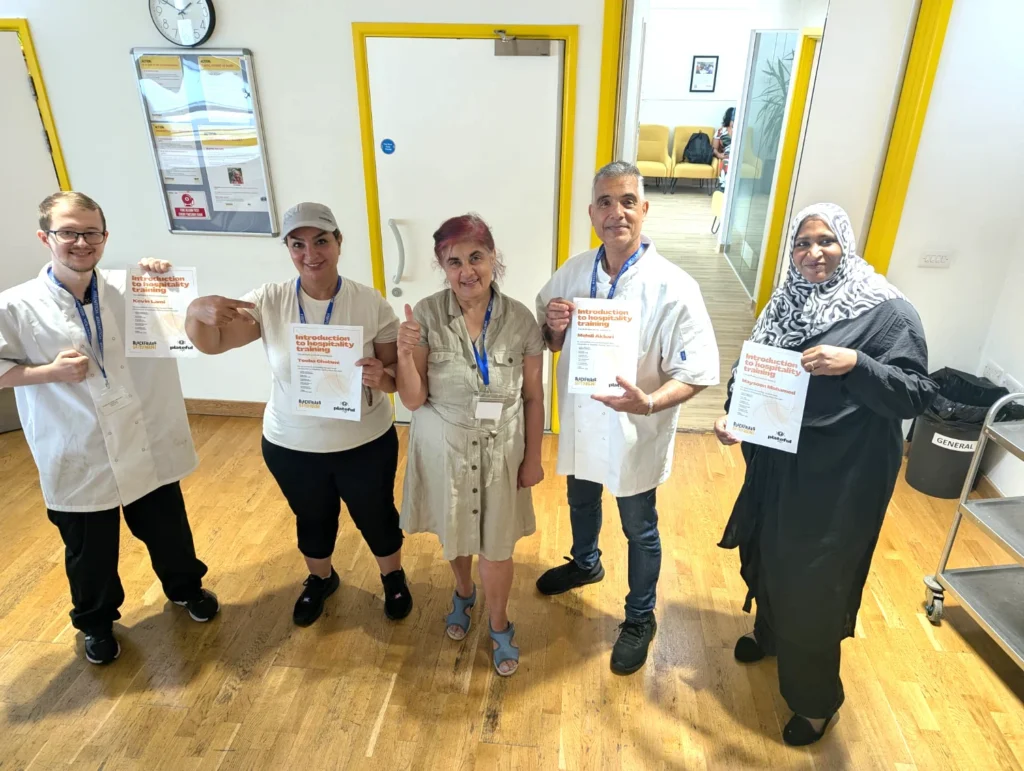
Building Skills, Confidence and Community Through Food Securing a commercial kitchen at Blackfriars Settlement has enabled Plateful Café to relaunch its hospitality training programme and continue supporting refugees and people seeking asylum on their journey towards employment, enterprise and social inclusion. Our Introduction to Working in Hospitality programme ran from 13 April to 30 June 2026, with five participants from Sudan, Albania and Iran successfully completing the course. Delivered over eight weeks, the programme combined practical kitchen training with English conversation sessions, providing participants with both vocational skills and opportunities to improve their confidence in spoken English. Training sessions took place every Monday and Tuesday from 10:30am to 1:30pm, followed by a dedicated one-hour English conversation class led by volunteer tutors. Skills and Knowledge Gained Participants developed a broad range of hospitality skills, including: Professional kitchen rules, hygiene and food safety Safe use of kitchen equipment and utensils Knife skills and vegetable preparation techniques Stocks, mirepoix and flavour development Soup preparation, including clear and thick soups Sauce-making and thickening methods Cooking methods including boiling, sautéing and roasting Menu planning and teamwork Food storage and temperature control Allergen awareness and food labelling COSHH and workplace safety procedures Waste management and sustainability practices Basic baking, bread-making and pastry skills The programme was designed not only to teach technical skills but also to prepare participants for the realities of working in a professional kitchen environment. Participant Feedback Developing Professional Kitchen Skills Participant Mojdeh Gholami reflected on the importance of learning industry standards: “If we want to work in a kitchen or a hotel, we need this kind of training to learn how to follow hygiene standards and kitchen procedures.” Mojdeh highlighted learning about food safety, allergen awareness, portion control and food preparation techniques, describing the course as providing “everything that is essential to know about working in a professional kitchen.” Building Knowledge and Confidence Kevin Lami spoke enthusiastically about the breadth of knowledge he gained throughout the course, including: Kitchen hierarchy and professional roles Kitchen equipment and utensils The five mother sauces Colour-coded chopping boards and knife safety Food allergens COSHH regulations Temperature control and food storage Food labelling procedures Vegetable preparation and knife cuts Bakery and pastry techniques Kevin described the programme as an “unforgettable experience” and expressed gratitude for the opportunity to learn in a supportive environment. Supporting Refugee Entrepreneurship For participant Maysoon Mohammed, the programme provided much more than practical skills. As the founder of Nubian Delights, Maysoon already had significant baking experience but lacked opportunities to develop and promote her business in the UK. Through Plateful Café she accessed: Hospitality training Cake decorating sessions Cooking workshops Opportunities to cook with children Business promotion opportunities through Plateful Café events Maysoon shared: “They don’t focus on the barriers people face – they recognise the skills and experiences we already have.” She credits the support received through Plateful Café with helping her grow her business, expand her product range and gain confidence as an entrepreneur while sharing Sudanese culture through food. Personal Growth and Integration Participant Jafar Mohammed highlighted the wider benefits of the programme: “I learned how to take care of food and avoid wasting it. I also learned how to bake cakes and bread and many other tasty dishes.” Importantly, Jafar reported improvements in teamwork, workplace behaviour and spoken English through regular practice with staff, volunteers and fellow participants. He described the programme as giving him “a new chance in life.” English Conversation Sessions Alongside practical training, participants attended weekly English conversation sessions delivered by volunteer tutor Dorota. These sessions focused on hospitality vocabulary, kitchen procedures and workplace communication, helping participants build confidence using English in a professional environment. The discussions also became an opportunity for cultural exchange, with participants sharing traditional dishes, cooking techniques and food traditions from Iran, Sudan and Albania. Dorota reflected: “We talked about kitchen protocol, hygiene, equipment and professional kitchen practices, but best of all we talked about food.” The sessions created opportunities for participants to practise conversational English while celebrating their cultural heritage and learning from one another. Topics included: Traditional family celebrations National dishes and ingredients Food traditions across different cultures Baking and pastry-making Shared culinary influences across countries These conversations helped strengthen relationships, build confidence and create a welcoming learning environment where participants felt valued for the knowledge and experiences they brought with them. Programme Impact The programme has demonstrated how practical hospitality training can support refugees and people seeking asylum to rebuild confidence, develop employability skills and strengthen social connections. Key outcomes included: Employment and Skills Increased understanding of professional kitchen operations Improved food hygiene and safety knowledge Development of practical cooking and baking skills Greater awareness of workplace standards and expectations Confidence and Communication Improved spoken English through regular conversation practice Increased confidence working as part of a team Enhanced ability to communicate in a workplace setting Enterprise and Progression Support for participants interested in self-employment and food enterprise Opportunities to showcase culinary skills and cultural heritage Greater confidence in pursuing employment and business opportunities Community and Inclusion Reduced isolation through group learning Cross-cultural exchange and understanding Stronger social networks and sense of belonging Looking Forward The successful completion of this first training programme marks an important milestone in the development of Plateful Café’s new training provision at Blackfriars Settlement. By combining practical hospitality training, English language support and community-building activities, the programme demonstrates how food can be a powerful tool for empowerment, integration and opportunity. We look forward to welcoming future cohorts and continuing to support refugees and people seeking asylum to build skills, confidence and brighter futures through hospitality.